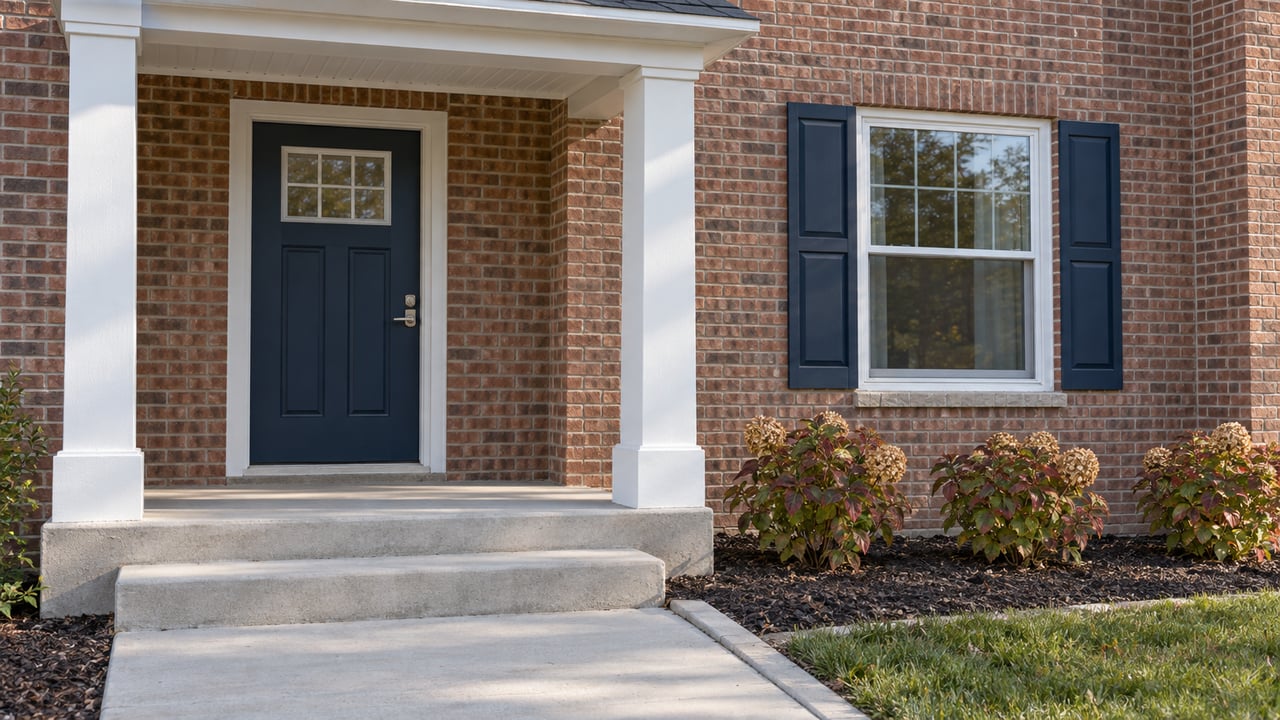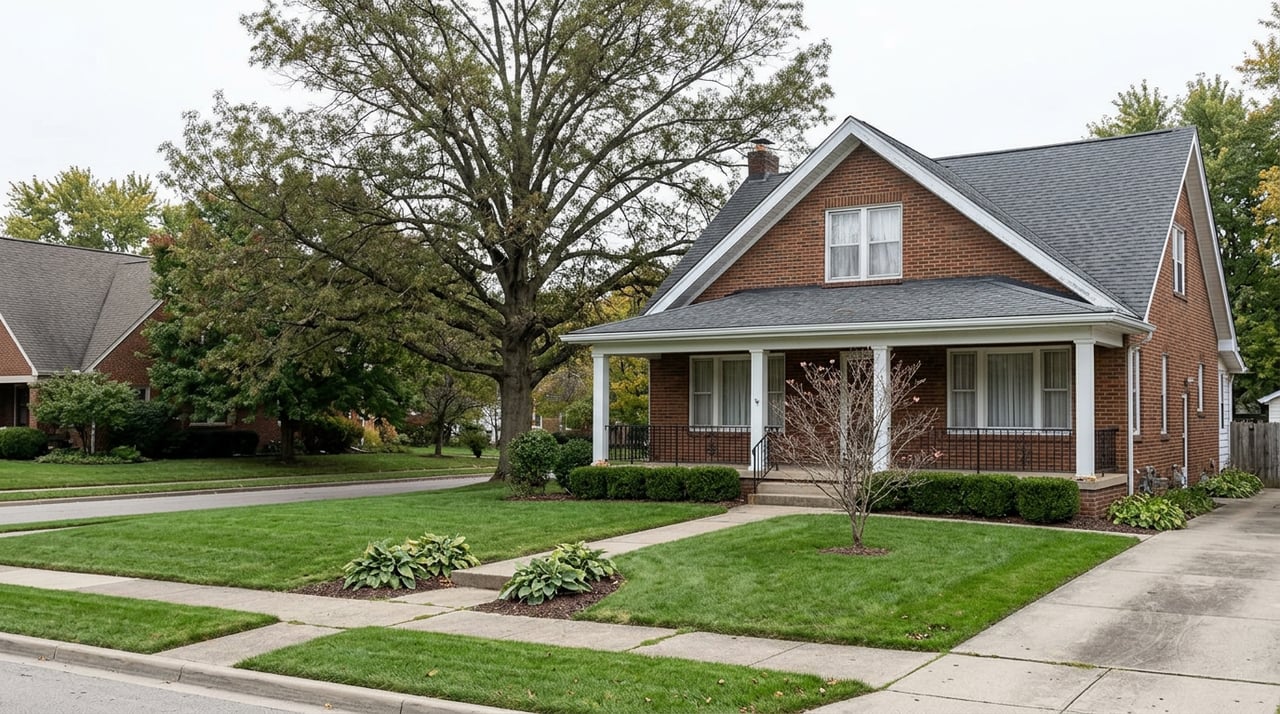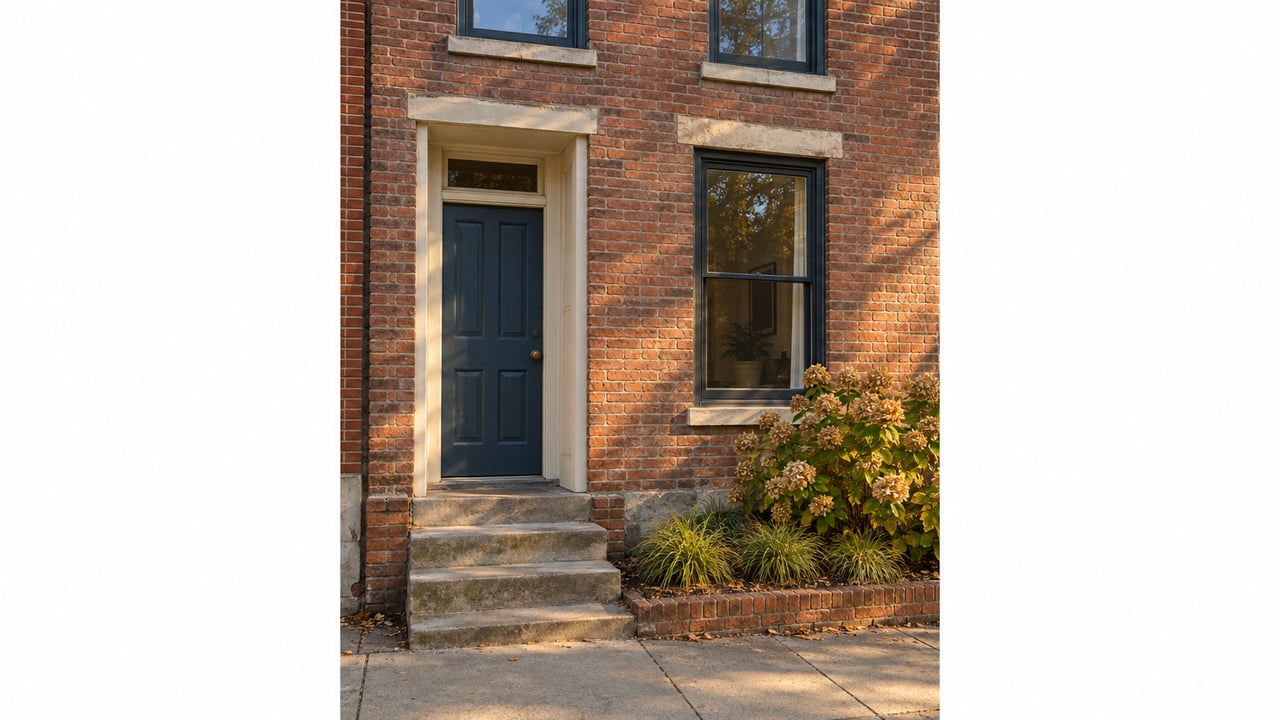
Say you find a shell of a Victorian on Covington's west side listed for $30,000. No working kitchen, original wiring, a roofline that needs attention, but a listing agent mentions the state's historic tax credit and you start doing math on a renovation budget. That credit is real. It has helped rehabilitate hundreds of buildings across Kentucky since 2005. What the listing won't tell you is that the Kentucky Heritage Council is not currently accepting new applications for the state half of that credit while it rewrites its forms to match a recent legislative overhaul. Federal applications are still being processed. The state credit, the one that often makes the lowest-priced Covington fixer-uppers pencil out, is paused until the paperwork catches up.
That gap between what a listing implies and what's actually available right now is a small version of a much bigger problem with how Covington's housing market gets described. The city's median sale price gets quoted as a single figure, somewhere in the mid $200,000s depending on the month you check, and that number gets treated as if it describes one market. It doesn't. Covington is at least four markets stacked within walking distance of each other, each moving on a different mechanism, and the citywide median is just an average of things that don't behave alike.
The Portal Number Isn't One Number
Even before you get to neighborhoods, the citywide figure moves depending on which tracker and which month you're looking at. Brokerage data from Redfin put Covington's median sale price at $232,000 in March 2026, up 2.5% from a year earlier, with homes taking 33 days to sell on average compared to 28 days the year before. Only 44 homes sold that month, down from 48 the March before. By June 2026, the same source's rolling figure had moved to $249,864, up 5.0% year over year. Zillow's home value index, which measures estimated value rather than actual closed sale prices, put the average at $224,437 as of the end of May 2026, down slightly from the year before, with homes going to pending in about 10 days.
None of these numbers are wrong. They're measuring slightly different things over slightly different windows, and the gap between them is already a preview of what happens once you split the city into its actual submarkets.
Westside Covington: The $145,000 Pocket
The most recent detailed data for Westside Covington covers July 2025, when the median sale price ran $145,000, down 17.7% from the year before. Price per square foot moved the opposite direction, up 81.6% year over year, a swing large enough to signal how thin this market trades rather than any real shift in value. Only 9 homes sold there that month, down from 10 the year before. With sales counts that small, a single renovated flip or a single distressed sale can move the median by tens of thousands of dollars, which is exactly why the price-per-square-foot and median-price figures were pulling in opposite directions in the same data set.
This is the pocket where the historic tax credit math matters most, because it's where the $30,000-to-$150,000 shells tend to sit. It's also the pocket where that credit's current pause bites hardest, since a rehab budget built around offsetting costs with the state credit needs a different plan until the Heritage Council finishes updating its regulations.
Mainstrasse: The Same City, $240,000 Higher
A few blocks away, Mainstrasse tells a completely different story. The most recent figures, covering March 2026, put the median sale price at $385,000, down 7.9% from the year before, with homes taking 22 days to sell compared to 7 days the year before. Only 5 homes sold that month, down from 7 the prior March. That's an even thinner sample than Westside's, which is worth remembering before treating either number as gospel.
What's different here isn't just price. It's what you're buying. Mainstrasse listings in this range tend to describe completed renovations: white shaker cabinetry, quartz counters, new electrical and HVAC already done, walking distance to the shops and restaurants along the historic strip. The $145,000 Westside number and the $385,000 Mainstrasse number aren't describing two prices for similar houses. They're describing two different stages of the same renovation cycle, priced blocks apart.
South Covington's Average and Median Disagree With Each Other
South Covington offers the clearest single example of why a citywide median flattens out useful information. In March 2026, the median sale price there was $294,000, down 2.0% from the year before. But the average sale price for the same month was $285,000, up 8.4% year over year. A median that fell while an average rose in the same neighborhood in the same month is a signal, not a contradiction. It means the mix of homes that sold changed. A handful of higher-priced sales pulled the average up even as the typical, middle-of-the-pack sale actually cost a little less than it did a year earlier. Twenty-eight homes sold in South Covington that March, down from 49 the year before, and days on market dropped to 32 from 53. Fewer transactions, but faster ones, with the top of the range doing more of the work than the middle.
If you're comparing South Covington to another Northern Kentucky suburb using only the median, you'd miss that the neighborhood's price behavior right now is being driven by a smaller number of higher-value sales rather than a broad increase in what a typical house costs.
The $858,000 Riverfront Figure Is a Preview, Not a Price
Covington's Central Business District posted the most dramatic number of all: a median sale price of $858,000 in February 2026, up 101.8% from the year before, with price per square foot up 31.3%. Taken at face value, that looks like the neighborhood doubled in value in twelve months. It didn't. A number that size, built on what's almost certainly a handful of transactions, reflects a couple of new high-end condo sales entering the mix, not a citywide repricing of existing housing stock.
The timing lines up with real development activity. In late July 2026, the City of Covington and Silverman and Company, along with Messer Construction and KZF Design, broke ground on Riverstone Place, the first mixed-use development at the Covington Central Riverfront. That's a 23-acre site along the Ohio River, bordered by 4th Street, Madison Avenue, and the Clay Wade Bailey Bridge, planned block by block with a different developer committed to each parcel and a 670-car public garage as part of the city's infrastructure buildout. The city had already secured $4.5 million in federal funding for site infrastructure back in February 2026. When a handful of new-construction units near a project like that close at premium prices, the neighborhood median jumps in a way that has more to do with what's being built next than what existing homeowners could sell for today.
The Fixer-Upper Math Runs Through an Office You Can't See From the Listing
Kentucky's Historic Rehabilitation Tax Credit is a dollar-for-dollar credit against income tax, based on the cost of a certified rehab, available to properties listed in a National Register Historic District or individually listed on the National Register. Covington's long-standing status as a Certified Local Government, a designation tied to its historic preservation ordinances, is part of why so many of its older blocks qualify. This credit is a meaningful part of the reason the $30,000-to-$150,000 end of the market functions at all. It's what turns a stripped Victorian shell into a project with a realistic budget rather than a money pit.
As of the most recent update from the Kentucky Heritage Council, the state is not accepting new applications for the state-level credit while it revises its regulations and forms to match a recent legislative expansion of the program. Federal credit applications are still being accepted and reviewed during this period. For anyone shopping the low end of Covington's market with a renovation budget built around that state credit, that pause is worth confirming directly with the Heritage Council before assuming the math still works the way it did last year.
What the Median Actually Tells You
None of Covington's individual submarket numbers are more truthful than the citywide median. They're just measuring narrower, more volatile slices of the same city. A buyer comparing Covington to another Northern Kentucky suburb using only the headline figure is comparing an average of a $145,000 fixer-upper pocket, a $385,000 renovated historic district, a neighborhood where the median and average are pulling in opposite directions, and a riverfront submarket getting reshaped in real time by new construction. Knowing which of those four mechanisms your budget actually lands in tells you more than the median ever will.
If you're trying to figure out which Covington pocket matches your budget and your renovation appetite, or you want a clearer read on how the Riverstone Place development might affect pricing near the riverfront over the next year, Martha Larsen knows this market block by block. Call or text Martha to schedule a free consultation and talk through what your number actually buys.